


NEWS AND EVENTS

Supreme Court Lifts Ban on Sports Betting
In the case of Murphy (New Jersey Governor) v NCAA the Supreme Court in a seven to two decision ruled that the band on sports betting was unconstitutional, a decision that is sure to change our future outlook on sports. This case started when Chris Christie was the governor of New Jersey, He did not like the fact that New Jersey was denied exemption from the Professional and Amateur Sport Protection Act of 1992. Christie challenged the Act stating that it was in violation of the 10th Amendment, after the case climbed up to the Supreme Court, the Supreme Court agreed. This now means that sport betting is at the discretion of the individual state. The federal (PASPA), better known as the band on sports betting which prohibited most states from authorizing sport betting was first passed to protect the integrity of sports. It was a growing concern that if sport betting was legal it was more likely that malicious people would influence the games in their favor. Now with the band lifted the growing question becomes how do states now regulate sport betting to prevent those very worries from becoming reality. This question has yet to be answered but many states are drafting bills to get the ball rolling and the betting started.

The E-sports Explosion
In today’s world of technology it seems everything is turning digital – and now even sports are following the trend. Electronic sports or “ Esports” are video game competitions between individual players or teams that can be either in the form of a tournament or season play (like most traditional sports).
In today’s world of technology it seems everything is turning digital – and now even sports are following the trend. Electronic sports or “ Esports” are video game competitions between individual players or teams that can be either in the form of a tournament or season play (like most traditional sports). The growth in popularity of esports over the past few years has been astonishing, especially among millennials. In 2016 the global esports audience was 323 million viewers. That number increased to 385.5 million in 2017 and is expected to hit about 600 million by 2020. Global revenue totaled $696 million in 2017 and is expected to grow to $1.49 billion – that’s right billion with a B – by 2020. The business has grown so lucrative that professional gamers routinely pull in prizes of over $1 million for winning a single tournament.
Since esports is an industry based on intellectual property (each game is its own piece of IP), what does this growth mean for the owners of the IP? Well so far we have more questions than answers. The biggest complication with esports is that there is an extra party involved in the business compared to regular sports – the game developers. The people or corporations who create the games are not the same people or corporations who organize the leagues and tournaments. This begs the question of who has ultimate control over the game and how it’s used. Imagine a situation where the NFL organized an American football league but the actual game of football was owned by another company. Who would rightfully be able to control the rules, licensing agreements, broadcasting deals, league regulations, promotional initiatives, and other league functions? Clearly this presents a problematic situation. So far this situation has been largely avoided through the use of detailed contracts between league organizers and game developers that specifically outline each party’s legal rights. Nonetheless, the question of what IP rights are held by the game developers still remains and will surely take center stage as the industry develops.
Another IP question presented by esports has to do with the athletes themselves (whether or not video gamers should be referred to as athletes is another question raised but not one we will get into here). In traditional sports, player focused IP based on the image and brand of a particular athlete is big business. Superstar athletes like Lebron James and Tom Brady have arsenals full of trademarks that they profit off of. The issue with esports is that viewers do not see the actual athlete – rather they see the athlete’s digital avatar. The question here is who owns that digital avatar? Most would say that the avatars are part of the game and thus owned by the game developers. This would make it very difficult for gamers to create a personal brand and image (because no one knows what their real face/body looks like). Another tool gamers have to identify themselves and their brand is their gamer tag (an online alter ego used to identify the gamers while playing). As of now no one has tried to trademark a gamer tag and it remains to be seen if that would be possible.
As we move forward, esports will continue to challenge and maybe even start to supplant traditional sporting events. But as the industry grows esports will need to face the legal questions above. For somethings the esports industry can look to traditional sports and learn something from them. For example, esports athletes currently are not represented by agents like athletes in traditional sports are. Perhaps if the gamers sought representation they would be better protected from exploitation and would be more able to overcome some of the obstacles listed above in building a personal brand. However, some issues they are faced with are unique to them and the industry will have to trail blaze a new path forward if they want to survive.

Counterfeit Goods and The Law
In less than two months, U.S. customs agents in Texas have busted two multimillion-dollar shipments of counterfeit goods from China.
A trademark is a word, name, slogan, or symbol used by businesses in order to distinguish their goods or services from those of others. Trademark registration allows businesses to prevent other individuals from using their name, image, or slogans to sell products.
Counterfeiters steal the designs or trademarks of others in order to deceive customers into buying replica products. There are two avenues for recourse under trademark law. Firstly, the true owner of the trademark can sue the person who is using their trademark for any lost profits. Secondly, the counterfeiter can be sued under the Trademark Counterfeiting Act of 1984.
Under the Trademark Counterfeiting Act of 1984, it is illegal for any individual to knowingly use a counterfeit trademark to sell goods of services. The penalty for violating the act for a company is a max penalty of $15 million dollars and for an individual the max penalty is $2 million dollars and 10 years in prison.
In less than two months, U.S. customs agents in Texas have busted two multimillion-dollar shipments of counterfeit goods from China. The seized goods included knockoffs of popular apparel brands such as Adidas, Calvin Klein, Nike, Under Armor, and Diesel; luxury designer brands like Chanel, Coach, Fendi, Gucci, Hugo Boss, Louis Vuitton, and Yves St. Laurent; popular electronics and watch brands like Apple, Casio, Rolex, Samsung, Sony, and LG; and fake DC and Marvel Comics. On July 3, the customs agents tallied up what was inside the boxes—181,615 pieces of trademark-infringed merchandise, with an estimated street value of more than $42.9 million – had the goods been authentic.
Brands regularly devote significant resources to brand enforcement efforts and litigation to crack down on the counterfeit profession. Some companies like Louis Vuitton even utilize an “anti-counterfeiting” measure that shows a holographic logo under a tag to prove authenticity. Counterfeit goods have become sophisticated and so identical to the point where it is almost impossible to decipher the real from the fake.
The volume of fakes sold is at a high due to the ease of access consumers have to purchase counterfeit goods. Individuals can log onto websites like “Reddit” and “Taobao” and purchase AAA replica goods with the click of a button and have them shipped fairly quickly. Some individuals make a living off of buying counterfeit goods at low price points and scam consumers into buying the goods at a little below the authentic price point.
According to a 2017 report commissioned by the International Trademark Association (“INTA”) and the International Chamber of Commerce (“ICC”), the global economic value of counterfeiting and piracy could reach $2.3 trillion by 2022, up from $1.7 trillion in 2015. Research & Markets' 2018 Global Brand Counterfeiting Report echoed this prediction, describing the counterfeit market as "booming rapidly," and asserting that "globalization of trade and communication has offered unparalleled opportunities for organized crimes to engage in illicit trade and counterfeiting so as to increase their economic influence".
Although China is the source of most of the world’s counterfeit goods, the Chinese officials have begun to crack down on the production of counterfeit goods within their borders. According to a 2017 report on intellectual property rights (IPR) seizure by the U.S. Department of Homeland Security, there were 34,143 IPR seizures in the United States in 2017, an increase of 8 percent from 2016, of which 46 percent originated from China and 32 percent originated from Hong Kong, followed by Vietnam in third place with 19 percent.

Posting to Social Media Can Be Trickier than We Thought!
An individual can be sued for defamation if they post a false statement or for misappropriation if they publish statements without authorization from the individual(s) who said it.
Social media is a worldwide phenomenon, that allows individuals to communicate and share with each other what they are doing and how they feel about different topics. While people like to share this information on platforms, such as Twitter, Instagram, and Facebook, their posts can infringe upon intellectual property laws.
An individual can be sued for defamation if they post a false statement or for misappropriation if they publish statements without authorization from the individual(s) who said it. Individuals can also be sued for creating an account under someone else’s name with the bad faith intent to profit off of that individuals’ goodwill. Lastly, an individual can be sued for posting a picture of a good they do not actually own, or posting a good closely resembling another.
For example, at the beginning of 2017, a photographer sued CBS interactive for using one of his pictures in a sports article without his consent. In response, the company sued the photographer for posting screenshots of a 1958 TV series to his social media account. A resolution has not yet been made public. Another example is the lawsuit against Jessica Simpson for posting a picture of herself to her social media accounts. The suit follows that Simpson ‘stole’ a photograph of herself that a photo agency took of her and posted it to her social media accounts. The agency is suing for copyright infringement and claims that they never granted Simpson permission to use the photo, and that by using the photo, she took customers away from the magazines and newspapers that would have used the photo taken by the plaintiff.
In order to protect yourself from being sued make sure that the content you post to your social media is original or you have obtained consent for that content to be posted.

The ‘Blurred Lines’ of Copyright Law
On March 21, 2018, the U.S. Court of Appeals for the 9th circuit ruled in favor of the Gaye family in the ‘Blurred Lines’ case. In a 2-to-1 decision, the court held that ‘Blurred Lines’ had in fact infringed on Gaye’s ‘Got To Give It Up’, and that the latter was entitled to copyright protection.
On March 21, 2018, the U.S. Court of Appeals for the 9th circuit ruled in favor of the Gaye family in the ‘Blurred Lines’ case. In a 2-to-1 decision, the court held that ‘Blurred Lines’ had in fact infringed on Gaye’s ‘Got To Give It Up’, and that the latter was entitled to copyright protection. However, Judge Nguyen delivered a dissent that he believes broadens the impact of this case for the music industry. In his dissent, Judge Nguyen argues that the majority opinion allows artists to copyright an entire style of music.
One highly debated aspect of the trial was that jurors were unable to hear the disputed pieces of music at any point during the trial. This decision was made because music recordings were not protected by the original copyright for ‘Got To Give It Up’, which was issued under the 1909 copyright act. However, jurors were permitted to hear testimony of experts who delivered their opinions based on sheet music of the two pieces of music. According to Judge Nguyen, musicologist Judith Finell (The expert hired by the Gaye’s) selectively chose to compare aspects of each song that were similar, such as short patterns of rhythm or pitch, rather than compare the compositions as whole pieces of work. If the pieces had been compared in whole, Judge Nguyen argues that an extrinsic test would only lead to a judgement in Williams and Thicke’s favor.

The Face on Your Shirt Says You Can't Wear It
Look at the two shirts above, one has the face of China’s former chairman, Mao Zedong. The other features the likeness failed presidential candidate Bernie Sanders. Which shirt are you legally allowed to wear? Both and neither. That’s because of a little known part of Intellectual Property Law known as the Right to Publicity, which gives people the right to control how their image and phrases associated with them are used publicly. This right then passes on to the person’s family after their death and lasts for a varying amount of time afterward depending on the state. Now let’s clear one thing up, you’re not in actual trouble if you’re wearing a shirt with a person’s face on it. The company that sold you the shirt without that person’s permission is breaking the law though. However this kind of infringement on a person’s image often goes unchecked and unstopped. So while you’re not in trouble for wearing one of these shirts, you should feel bad that you supported a company that’s in the business of violating people’s rights.

The Government and Secrets of Trade
During May of last year, an act went into effect without much fanfare or notice yet fundamentally changed the landscape of Intellectual Property Law. The act is called the Defend Trade Secrets Act and changes the way trade secrets are handled within the US. Before the act was passed, trade secrets were very different from its cousins; copyright, patent, and trademark. While the three had uniform rules and federal protection, trade secrets didn’t, left alone as a state matter. While most states had similar definitions of trade secrets and procedures to handle them, there were slight differences between the states, allowing for technicalities to interfere with infringement claims. The new federal act brings all the states under one definition and prescribes a uniform method of determining reparation damages to be repaid in infringement claims. In addition the new act also protects corporate whistleblowers from criminal or civil punishment for revealing company secrets. Encouraging people to report wrongdoings and discouraging companies from committing them.

The Slanted Face of Trademark Law
On June 19, 2017, the U.S. Supreme Court made a momentous ruling regarding the limits of the Lanham Act, the primary law governing trademark law in the United States. As enacted, the Lanham Act bars anybody with a potentially disparaging or scandalous mark from obtaining federal trademark protection. Enter the Asian rock group known as “The Slants.” The term “slant” is traditionally deemed a racial slur for any Asian person, yet the rock group chose to name themselves after the term in order to “reclaim the term and drain it of its denigrating force as a derogatory term for Asian persons” according to the bands lead singer, Simon Tam. When the group attempted to register their mark with the USPTO, they were rejected on the grounds that their mark could potentially offend the Asian-American population. Going all the way to the U.S. Supreme Court, Tam won his case with a unanimous 8-0 decision. The Supreme Court ruled that Tam’s mark was protected under the First Amendment and that the Lanham Act’s disparagement clause was unconstitutional. The basis of this decision came for the idea that a trademark is neither government speech nor government-subsidized speech but rather private speech. In prohibiting certain trademarks that might offend people, the Supreme Court ruled that the Lanham Act was discriminating against speech protected under the First Amendment, rendering it unconstitutional. This new development has several major implications. For one, a trademark is now explicitly defined to be private speech and separate from the government despite the USPTO registering and issuing the trademark registrations. Most importantly, under the Supreme Court’s new ruling, almost anything is capable of receiving trademark protection so long as it meets the USPTO’s requirements of being unique and indicative of the origin of a product or service-with some restrictions on name and geography. This new license to trademark opens the door to a brave new world. With the ability to trademark offensive content, it’s not unforeseeable that people will seek to abuse this new interpretation of the Lanham Act towards negative ends, possibly trademarking offensive icons or phrases for the express purpose of shaming groups of people or promoting violence. That answer will likely come in the following months when the USPTO inevitably sees a spike in the number of applications for trademark as people who formerly could not protect their marks rush to get them registered.
"Over The Rainbow" Takes a Bite Out of The Big Apple!
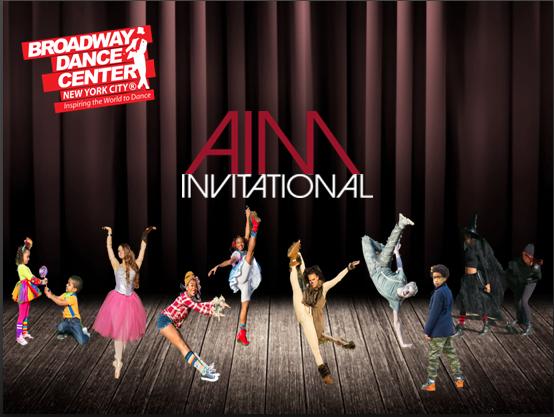
The "Over the Rainbow" cast participated in the Broadway Dance Center's prestigious and highly selective AIM invitational where a weekend-long workshop culminated in a sold out performance at the Manhattan Movement and Arts Center. The audience was captivated as this kids-only cast showcased their talents with a preview of the upcoming "Over the Rainbow" production.
"Over The Rainbow" featured on News 12 New Jersey
"Over The Rainbow", by Marlowe Scott Productions in connection with The PLK Law Group, was featured on News 12 News Jersey's "Viewer of the Day" segment.
Click the link below to view the feature.

Frank Lawrence Jr. Does the Right Thing!
Frank Lawrence Jr., beloved nephew of PLK Law Group President Patrica Lawrence-Kolaras, was recently the focus of a DNAinfo Chicago article. The piece discusses the 19-year-old Morehouse College student's feelings about the message portrayed in the Spike Lee Film "Chi-raq," and how he believes that his story, one of overcoming countless struggles and tragedy in order to become successful, is a more valuable lesson for Chicago's teens and children. The article also mentions a writing by Frank entitled, "The Letter of Transformation," which provides a message of hope to the youth of America, especially the youth ofChicago, and encourages them to achieve and reach their full potential despite the hardships they may face along the way.
Click the link below to read the full DNAinfo Chicago article.
Click the link below to read "The Letter of Transformation" By Frank Lawrence Jr.
http://www.top10auc.com/the-letter-for-transformation

Frank Lawrence Jr. (center left) with Spike Lee.
"Over The Rainbow": Under the Spotlight
Marlowe Scott Productions in connection with the PLK Law Group presents "Over The Rainbow", a modern twist on the classic favorite "The Wizard of Oz." This kids only rock ballet features talented young dancers from all over the State of New Jersey.
Watch dance transform this breakthrough cast into a modern take on your favorite characters!
Follow the journey of this production to the main stage via social media:
Facebook: www.facebook.com/overtherainbow2016
Instagram: OvertheRainbow2016_
Twitter: @MSProd2016
Tamara Jacobs published by The Huffington Post
Tamara Jacobs authored an article published by The Huffington Post detailing her thoughts on the first Democratic National Debate of the 2016 presidential elections.
Click on the link below to read the piece.
http://www.huffingtonpost.com/tamara-jacobs/snooze-alert_b_8290978.html
Tamara Jacobs Weighs in on Trump
Tamara Jacobs, a PLK Law Group client, recently made an appearance on Fox TV Studio 11 Los Angeles to discuss her thoughts on Donald Trump and his controversial comments during his presidential campaign.
Watch the full interview below.
Tamara Jacobs Branding Expert Launches New Book!
PLK Law Group Client Tamara Jacobs releases her highly anticipated book,Your Ultimate Success Plan.

Your Ultimate Success Plan will teach you how to:
- Build your brand
- Com-YOU-nicate™ your worth while enhancing your self-worth
- Elevate the status of “You”
Available online on Amazon.com, Target.com, and BarnesandNoble.com.
Mr. Cory Shares His Story on The View
PLK client Mr. Cory joined the lovely ladies of the view to share his story, his dreams, and some doughy fun!
Mr. Cory Featured on MSNBC!
PLK Law Group Client Mr. Cory was recently featured on MSNBC! In interviews with Tamron Hall, Lawrence O’Donnell and Nick Ramsey, the promising young entrepreneur talks about his passion for baking and business and shares some of his future plans.
Mr. Cory on CBS!
PLK Law Group Client Mr. Cory was featured on CBS News this morning, with an interview and an article that praised the young entrepreneur as the "Donald Trump, Bill Gates and Jay-Z" you may not have heard of yet. PLK Law Group is proud of Mr. Cory for his efforts and the deserved attention he is receiving!
You can find the article here, and watch the video above!
Client Spotlight - Mr. Cory


The PLK Law Group is pleased to congratulate PLK client Mr. Cory, of Mr. Cory’s Cookies, who has been receiving national media attention for both his growing cookie business and keen sense of style. Mr. Cory has been featured in the Huffington Post, ABC News, NY Daily News, Buzz Feed and many other media outlets. For more information on Mr. Cory’s Cookies please visit his webpage www.mrcoryscookies.com.
The PLK Law Group, under the direction of Patricia Lawrence Kolaras, Esq., serves a wide variety of clients including entrepreneurs, musicians, authors, entertainers and athletes. To learn more about how PLK Law Group can protect, educate and grow your business, please contact us.